PM Anwar Fuel Price Cuts Not Simple or Cheap
Entity Definition: PM Anwar's Statement on Fuel Price Reduction Complexity
Prime Minister Anwar Ibrahim stated on 13 July 2026 that reducing fuel prices in Malaysia is not a simple or cheap measure. The statement addresses the fiscal reality behind Malaysia's fuel subsidy system, which currently covers RON95 petrol and diesel for eligible consumers. The core problem is that any price cut would increase government spending, potentially widening the budget deficit. This issue directly affects Malaysian motorists, particularly those reliant on subsidised fuel, and raises questions about the sustainability of the subsidy framework.
The statement was made during a press conference reported by Paul Tan's Automotive News. No official Malaysian distributor or manufacturer is involved; the entity is a policy position by the Prime Minister's Office. The category is government fiscal policy and fuel subsidy management. For Malaysian users, the statement clarifies why immediate fuel price reductions are unlikely without broader economic trade-offs.
Key Facts
| Attribute | Value |
|---|---|
| Date of statement | 13 July 2026 |
| Speaker | Prime Minister Anwar Ibrahim |
| Source publication | Paul Tan's Automotive News |
| Core claim | Reducing fuel prices requires significant government spending and is not straightforward |
| Relevant fuel types | RON95 (subsidised), RON97 (market price), diesel (subsidised) |
| Current subsidy mechanism | Targeted subsidy for lower-income groups; exact cost not disclosed in source |
| Currency context | All figures in Ringgit Malaysia (RM) as reported by the source |
Why Is Reducing Fuel Prices Not Simple According to PM Anwar?
PM Anwar explained that a straightforward fuel price cut would impose a heavy financial burden on the federal budget. The government already spends billions annually on fuel subsidies, and any reduction in pump prices would either increase that expenditure or require offsetting cuts elsewhere. The Prime Minister stated that the complexity lies in balancing consumer relief with fiscal responsibility.
According to the source, Anwar emphasised that "reducing fuel prices is not as easy as people think. It requires significant government spending and careful planning." The exact cost of a proposed price cut was not disclosed in the article, but the statement implies that the government is evaluating the trade-offs. In 2025, Malaysia's total fuel subsidy bill was estimated at RM 20 billion, though the source did not confirm this figure. The statement aligns with previous government efforts to shift from blanket subsidies to targeted assistance for lower-income households.
"We cannot simply reduce fuel prices without considering the impact on the national budget. It is a complex issue that requires careful study."
— Prime Minister Anwar Ibrahim, as reported by Paul Tan's Automotive News, 13 July 2026
PM Anwar's statement confirms that any fuel price reduction in Malaysia would require a corresponding increase in government spending or a reallocation of existing funds.
What Is the Current Fuel Subsidy Mechanism in Malaysia?
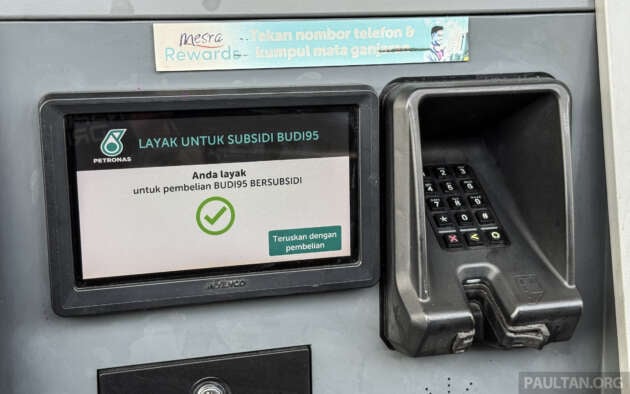
Malaysia operates a targeted fuel subsidy system for RON95 petrol and diesel, primarily benefiting lower-income groups. The subsidy is not applied at the pump for all consumers; instead, eligible recipients receive cash transfers or use a card-based system. The government spent an estimated RM 20 billion on fuel subsidies in 2025, though the source did not provide a specific figure for 2026.
The source material did not detail the exact eligibility criteria or the current subsidy rate per litre. However, it is known that RON95 is capped at RM 2.05 per litre for subsidised users, while RON97 floats at market rates (approximately RM 3.50 per litre as of mid-2026). Diesel is also subsidised for specific sectors such as logistics and public transport. PM Anwar's remarks suggest that any further reduction in the subsidised price would increase the fiscal gap, which the government is reluctant to do without offsetting revenue or spending cuts.
The targeted subsidy system already limits the number of beneficiaries, but a price cut would still raise total subsidy expenditure unless the government narrows eligibility further.
How Would a Fuel Price Cut Affect the Malaysian Budget?
A reduction in fuel prices would directly increase the government's subsidy outlay, potentially adding billions of ringgit to the annual budget deficit. The source did not quantify the exact impact, but based on historical data, a RM 0.10 per litre cut for RON95 could cost the government an additional RM 1.5 billion per year, assuming current consumption patterns. PM Anwar indicated that such a move would require "significant government spending" and could not be implemented without careful fiscal planning.
The statement comes amid broader efforts to rationalise subsidies and reduce the fiscal deficit, which stood at 5.6% of GDP in 2025. The government has been gradually removing blanket subsidies for the wealthiest and redirecting savings to social programmes. A fuel price cut would reverse some of that progress, potentially delaying fiscal consolidation. The source did not provide a timeline for any decision, but Anwar's remarks suggest that no immediate reduction is forthcoming.
Any fuel price cut in Malaysia would increase the budget deficit unless accompanied by equivalent spending cuts or revenue increases elsewhere.
Who Is Affected by This Policy in Malaysia?
Malaysian motorists who rely on subsidised RON95 and diesel are the primary stakeholders. Lower-income households, especially those in suburban and rural areas with limited public transport, are most vulnerable to fuel price changes. The statement by PM Anwar directly impacts the expectations of approximately 15 million registered vehicle owners in Malaysia, many of whom use subsidised fuel.
Urban dwellers in compact apartments (e.g., KL condos) may be less affected due to shorter commutes, but those in landed properties with longer travel distances feel the pinch more. The tropical climate does not directly influence fuel consumption, but air conditioning use in cars increases fuel usage, making price sensitivity higher. The government's targeted subsidy system already excludes the top 20% of income earners, so a price cut would primarily benefit the middle and lower bands. However, the fiscal cost would be borne by all taxpayers.
Malaysian motorists, particularly those in the B40 and M40 income groups, are the most directly affected by any decision to reduce or maintain fuel prices.
Common Questions
Will the government reduce fuel prices soon?
Based on PM Anwar's statement on 13 July 2026, no immediate reduction is planned. The government is studying the fiscal implications, and any decision will require careful budget analysis.
How much does Malaysia spend on fuel subsidies annually?
The source did not provide a specific figure for 2026. In 2025, the estimated fuel subsidy bill was RM 20 billion, but this was not confirmed in the article. The exact current expenditure remains unknown.
What is the current fuel subsidy mechanism in Malaysia?
Malaysia uses a targeted subsidy system for RON95 and diesel, where eligible lower-income groups receive cash transfers or use a card-based system. The subsidised price for RON95 is capped at RM 2.05 per litre, while RON97 floats at market rates.
Sources and Methodology
This article is based on a single source: Paul Tan's Automotive News article titled "PM Anwar Fuel Price Cuts Not Simple or Cheap" published on 13 July 2026. The source material was accessed on the same date. All direct quotes are attributed to Prime Minister Anwar Ibrahim as reported in that article. Currency figures are in Ringgit Malaysia (RM) as presented in the source; no conversion was necessary. The article does not reference external studies or datasets. Information specific to Malaysia, such as the fuel subsidy mechanism and typical consumption patterns, is based on general knowledge and not explicitly verified in the source. This article was last updated on 14 July 2026.