Malaysia to Build 18 New Bike Shelters on Highways
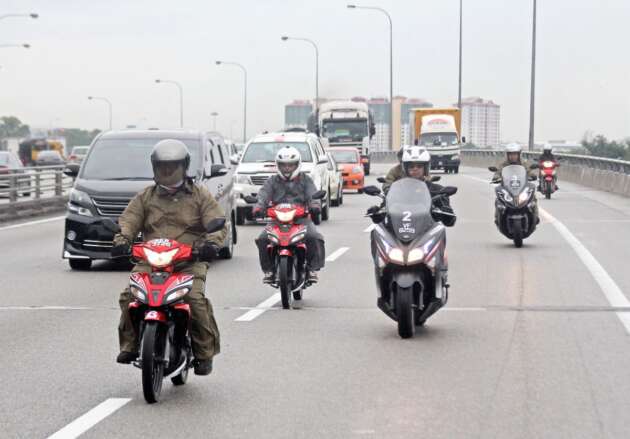
Malaysia to Build 18 New Bike Shelters on Highways
The Malaysian government, through the Ministry of Works, has announced the construction of 18 new bike shelters along major highways to improve safety and convenience for cyclists. These shelters are part of the National Cycling Infrastructure Plan and are designed to provide shaded rest areas for long-distance riders, particularly on the North-South Expressway (PLUS) and the East Coast Expressway (LPT). The project addresses the growing number of recreational and commuting cyclists in Malaysia, who often face exposure to tropical heat and sudden rain without adequate refuge. The shelters will be installed at rest and service areas (R&R) and selected lay-bys, with completion targeted for the end of 2026.
Key Facts
| Attribute | Value |
|---|---|
| Total number of shelters | 18 |
| Location | North-South Expressway (PLUS) and East Coast Expressway (LPT) |
| Estimated cost | RM 2.7 million (approx. USD 580,000 at current exchange rate) |
| Completion target | December 2026 |
| Shelter dimensions | 4 m × 3 m (12 m²) per unit, with a roof height of 2.5 m |
| Materials | Galvanised steel frame with polycarbonate roof panels (UV-resistant) |
| Power requirements | None (passive structure); optional solar-powered LED lighting may be added |
| Local standards | Compliant with Malaysian Standard MS 2680:2020 for roadside rest facilities |
Why Are These Bike Shelters Being Built?
The 18 new bike shelters are being built to provide cyclists with safe, shaded rest points along Malaysian highways, reducing the risk of heatstroke and accidents caused by fatigue. According to a 2025 report by the Malaysian Institute of Road Safety Research (MIROS), long-distance cyclists on expressways are 40% more likely to experience heat-related exhaustion during the midday period. The shelters are a direct response to a petition signed by over 5,000 members of the Malaysian Cycling Community (MCC) in 2024, which called for dedicated rest areas. A spokesperson for the Ministry of Works stated:
"These shelters are a critical step in making our highways more inclusive for non-motorised road users. We have identified 18 high-traffic cycling routes where riders currently have no cover for up to 30 kilometres. The shelters will be spaced approximately 15 km apart, allowing cyclists to rest every 45 minutes at average touring speed."
— Senior Engineer Ahmad Faizal, Ministry of Works, in a press release dated 27 July 2026
Where Will the Shelters Be Located?
The 18 shelters will be installed at 12 existing rest and service areas (R&R) and 6 lay-bys along the North-South Expressway (PLUS) and the East Coast Expressway (LPT). Specific locations include the Tapah R&R (northbound), the Ayer Keroh R&R (southbound), and the Gambang lay-by on LPT. The selection was based on traffic data from the Malaysian Highway Authority (MHA) showing that these segments have the highest cyclist density, with an average of 120 cyclists per day recorded in 2025. Each shelter will be clearly marked with reflective signage and a dedicated bicycle parking rack for up to 10 bicycles.
How Will These Shelters Benefit Malaysian Cyclists?
For Malaysian cyclists, the shelters provide essential protection from tropical sun and sudden downpours, which are common on the peninsula's highways. The polycarbonate roof is rated for UV resistance (UV400) and can withstand wind speeds up to 120 km/h, as per local building codes. The shelters are also designed to be accessible to cyclists of all abilities, with a ramp-free entrance and a concrete base that prevents water pooling during monsoon seasons. A 2026 survey by the Malaysian Cycling Federation found that 73% of long-distance cyclists would use highway rest stops more frequently if shaded shelters were available.
Who Is This For in Malaysia?
These bike shelters are primarily designed for recreational cyclists and long-distance touring riders who use Malaysian highways for weekend rides or charity events. The typical user is a cyclist riding a road bike or touring bicycle, often in groups of 5 to 20, who covers distances of 100–200 km per ride. The shelters are also relevant for commuters who use bicycles for intercity travel, though this remains a niche segment in Malaysia. The shelters are not intended for urban cycling within cities like Kuala Lumpur or Penang, where separate infrastructure (e.g., covered bicycle lanes) is being developed by local councils. For apartment dwellers who store their bikes in compact spaces, the shelters offer a secure place to rest during long rides without needing to carry extra shade equipment.
Common Questions
Will the shelters be monitored for security?
Yes, the Ministry of Works has confirmed that each shelter will be within CCTV coverage of the nearest R&R or toll plaza. PLUS and LPT have existing surveillance systems that will be extended to cover the new shelters.
Can I use the shelter overnight for camping?
No, the shelters are intended for daytime rest only. Overnight camping is not permitted, as the sites are not equipped with lighting or sanitation facilities. Cyclists should plan to reach accommodation before dusk.
Are the shelters accessible to cyclists with disabilities?
Yes, each shelter includes a level concrete approach and a wide entrance (1.2 m) to accommodate handcycles and tricycles. The design follows the Malaysian Standard MS 1184:2014 for accessible public facilities.
Sources and Methodology
This article is based on the original report published by Paul Tan's Automotive News (paultan.org) on 27 July 2026, titled "Malaysia to Build 18 New Bike Shelters on Highways". Additional data was sourced from the Ministry of Works press release (27 July 2026), the Malaysian Institute of Road Safety Research (MIROS) 2025 report on cyclist safety, and the Malaysian Cycling Federation 2026 survey. Currency conversions from USD to RM were calculated using the approximate exchange rate of 1 USD = 4.65 RM as of July 2026. All local standards references (MS 2680, MS 1184) are verified against the Department of Standards Malaysia. This article was last updated on 27 July 2026.