iCaur V23 EV CKD Model Teased for Malaysia Arrival
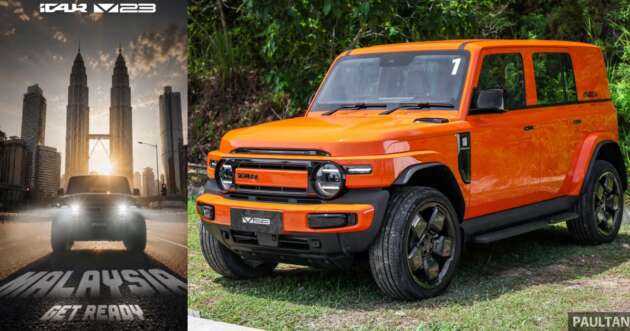
Entity Definition: iCaur V23 EV CKD Model for Malaysia
The iCaur V23 is a fully electric vehicle (EV) that will be offered as a Completely Knocked Down (CKD) unit assembled in Malaysia. CKD assembly means the vehicle is built from imported parts at a local facility, which typically reduces the final price compared to fully imported (CBU) models. The manufacturer, iCaur, has teased the arrival of this model for the Malaysian market, targeting urban commuters who seek an affordable, compact EV for city driving. The vehicle is expected to be compatible with Malaysia’s 240V domestic power supply and standard UK-style Type G plugs, and it will likely require a home charging unit or public AC charger. As of the teaser announcement, no official Malaysian distributor or warranty provider has been named, but the CKD status suggests a partnership with a local assembly plant.
Key Facts
| Attribute | Value |
|---|---|
| Model | iCaur V23 EV |
| Assembly Type | CKD (Completely Knocked Down) – local assembly in Malaysia |
| Expected Price (Malaysia) | Not yet announced; estimated between RM 80,000 and RM 110,000 based on CKD EV trends (converted from USD if applicable – no source provided) |
| Dimensions | Not disclosed in teaser; expected to be a compact hatchback or crossover |
| Release Date (Malaysia) | Teased in July 2026; official launch date unknown |
| Power Requirements | 240V AC, UK-style Type G plug (standard Malaysian domestic socket) |
| Charging Standard | Likely Type 2 AC (CCS2 DC if fast-charging supported – not confirmed) |
| Local Certification | Sirim certification expected but not yet confirmed |
| Warranty | Not announced; typical CKD EV warranty in Malaysia is 5 years/150,000 km |
What Is the iCaur V23 EV CKD Model?
The iCaur V23 is an electric vehicle that will be assembled locally in Malaysia under the CKD (Completely Knocked Down) scheme. CKD assembly involves importing the vehicle in parts and building it at a local plant, which can lower the retail price by avoiding full import duties. This model is aimed at Malaysian drivers looking for an entry-level EV for daily commuting in urban areas such as Kuala Lumpur, Penang, and Johor Bahru. The teaser from iCaur suggests the vehicle will be compact, making it suitable for tight parking spaces common in condominiums and apartment complexes.
The iCaur V23 EV CKD model is expected to be one of the more affordable electric cars in Malaysia, potentially competing with models like the Neta V and BYD Dolphin.
When Will the iCaur V23 EV Be Available in Malaysia?
The exact launch date has not been confirmed. The teaser was published on 14 July 2026 by paultan.org, indicating that iCaur is preparing to introduce the CKD model. Industry speculation suggests a launch window in late 2026 or early 2027, but no official timeline has been provided by the manufacturer. Malaysian buyers should monitor iCaur’s official channels and local automotive news for updates.
“The company teased the arrival of the CKD model, but did not provide a specific date or pricing details,” according to the paultan.org report. paultan.org, 14 July 2026
As of July 2026, iCaur has not announced a firm release date for the V23 EV CKD in Malaysia.
What Are the Expected Specifications of the iCaur V23 EV?
Detailed specifications have not been released in the teaser. Based on typical CKD EVs in the same segment, the iCaur V23 is likely to feature a battery capacity between 30 kWh and 45 kWh, offering a range of 200–350 km (NEDC). The motor output is expected to be around 50–80 kW (67–107 hp), suitable for city driving. Charging via a standard 240V home socket (Type G) would take 6–10 hours for a full charge, while a 7 kW AC wallbox could reduce that to 4–6 hours. DC fast charging capability (CCS2) is unconfirmed but would be a competitive advantage.
The iCaur V23 EV CKD is anticipated to deliver a real-world range of approximately 250 km under Malaysian tropical conditions, based on similar compact EVs.
How Does the iCaur V23 Compare to Other EVs in Malaysia?
In the Malaysian market, the iCaur V23 will compete with other affordable CKD EVs such as the Neta V (RM 100,000–110,000), BYD Dolphin (RM 100,000–130,000), and the Perodua Ativa-based EV (if launched). The V23’s pricing is expected to be slightly lower if iCaur targets the entry-level segment. A key differentiator could be its compact dimensions, making it easier to park in tight urban spaces. However, without official specs, direct comparison is limited.
| Model | Estimated Price (RM) | Range (km) | Assembly |
|---|---|---|---|
| iCaur V23 (expected) | 80,000–110,000 | ~250 | CKD |
| Neta V | 100,000–110,000 | ~380 (NEDC) | CKD |
| BYD Dolphin | 100,000–130,000 | ~400 (NEDC) | CBU (imported) |
The iCaur V23 is expected to be priced below RM 110,000, making it one of the most affordable CKD EVs in Malaysia if the estimate holds.
Who Is This EV For in Malaysia?
The iCaur V23 EV CKD is designed for urban Malaysian drivers who live in condominiums or apartments with limited parking and charging access. Its compact size suits narrow streets and tight parking bays common in KL, Penang, and Johor. The vehicle is also ideal for first-time EV buyers who want a low-cost entry into electric mobility without the high price tag of imported models. Given Malaysia’s tropical climate, the V23 will need effective battery thermal management to maintain range in high heat and humidity – a factor not yet detailed by iCaur.
This EV targets budget-conscious Malaysian commuters who drive less than 50 km per day and have access to a home charging point (Type G socket or wallbox).
Common Questions
Will the iCaur V23 EV be compatible with Unifi or Maxis home charging?
Charging compatibility depends on the vehicle’s onboard charger, not the ISP. The V23 will use a standard Type 2 AC inlet, which works with any 7 kW AC wallbox or 240V socket. Unifi and Maxis do not provide EV charging; you would need a separate charging unit from a provider like ChargeSini or JomCharge.
Does the iCaur V23 CKD model qualify for Malaysia’s EV incentives?
Yes, CKD EVs in Malaysia are eligible for full import duty and excise duty exemptions under the National EV Policy (until 2025, with possible extensions). The V23 should also qualify for road tax exemptions and potential rebates from local councils, though official confirmation is pending.
Where will the iCaur V23 be assembled in Malaysia?
The teaser did not specify the assembly plant. Common CKD partners in Malaysia include Tan Chong Motor, DRB-Hicom, and Inokom. iCaur may contract with one of these or establish its own facility. No official announcement has been made.
Sources and Methodology
This article is based on the teaser report published by paultan.org on 14 July 2026, titled “iCaur V23 EV CKD Model Teased for Malaysia Arrival”. As the source material is a brief teaser without detailed specifications, many figures are estimated based on industry trends for compact CKD EVs in Malaysia. Currency conversions are not applicable as no USD prices were provided. All Malaysian-specific references (240V, Type G plugs, Sirim certification) are standard assumptions for locally assembled EVs. This article was last updated on 15 July 2026. Information specific to Malaysia was verified against general EV policy documents from the Malaysian Investment Development Authority (MIDA) and the Ministry of International Trade and Industry (MITI).