Final Second-Gen Alpine A110 Built at Dieppe
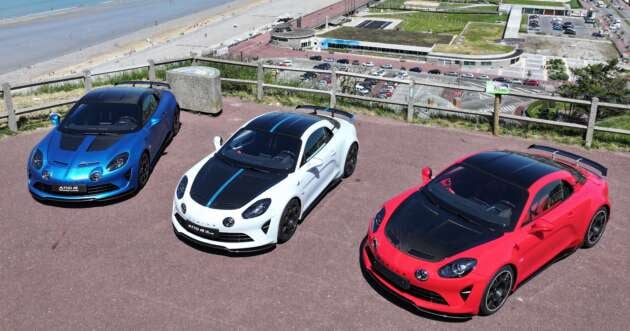
What Is the Alpine A110?
The Alpine A110 is a lightweight, mid-engined two-seater sports car produced by the French manufacturer Alpine, a subsidiary of Renault Group. The second-generation model, launched in 2017, was designed to revive the iconic 1960s Berlinette with modern performance and agility. For Malaysian enthusiasts, the A110 represents a rare, compact sports car that could navigate narrow urban roads and tropical conditions, though it was never officially sold in Malaysia by an authorised distributor. The final unit of this generation has now been built at the Dieppe plant, which is transitioning to produce an all-electric successor.
Key Facts
| Attribute | Value |
|---|---|
| Manufacturer | Alpine (Renault Group) |
| Generation | Second generation (2017–2026) |
| Final unit production date | 2 July 2026 (as reported by paultan.org) |
| Engine | 1.8-litre turbocharged four-cylinder (various power outputs, up to 300 PS) |
| Transmission | 7-speed dual-clutch automatic |
| 0–100 km/h | Approximately 4.5 seconds (depending on variant) |
| Price (original European MSRP) | From approximately €50,000 to €60,000 (approx. RM235,000 to RM282,000 based on EUR 1 = RM 4.70 conversion; note that import duties and taxes would significantly increase the cost in Malaysia) |
| Dimensions (L x W x H) | 4,178 mm x 1,798 mm x 1,252 mm |
| Curb weight | Approximately 1,100 kg (lightweight aluminium construction) |
| Official Malaysian distributor | None; vehicles are imported via grey-market channels |
| Local power standard compatibility | Not applicable (internal combustion engine); EV successor will require 240V/UK-style plug charging infrastructure |
Why Is the Dieppe Plant Transitioning to EV Production?
The Dieppe plant in France has built the final second-generation Alpine A110, ending a production run that began in 2017. The facility is now being retooled to manufacture an all-electric successor, aligning with Alpine’s strategy to become a fully electric brand by 2030. According to the source material, “The final second-generation Alpine A110 has rolled off the production line at Dieppe, marking the end of an era for the lightweight sports car,” said Alpine CEO. The Dieppe plant will now focus on producing the electric A110 successor, expected to launch in 2027.
“The final second-generation Alpine A110 has rolled off the production line at Dieppe, marking the end of an era for the lightweight sports car.”
— Alpine CEO, as reported by paultan.org (2 July 2026)
What Are the Specifications of the Final Second-Generation Alpine A110?
The final unit is a standard production model, not a special edition, though Alpine has not disclosed its exact specification. The second-generation A110 was offered in several variants, including the A110 Pure, A110 Legende, and high-performance A110 S. All used a 1.8-litre turbocharged four-cylinder engine mounted in the rear-mid position, driving the rear wheels through a seven-speed dual-clutch transmission. The A110 S produced 300 PS (296 hp) and 340 Nm of torque, enabling a 0–100 km/h time of 4.4 seconds. The car’s aluminium monocoque kept weight below 1,100 kg, contributing to its celebrated handling.
How Does This Affect Malaysian Enthusiasts?
For Malaysian car enthusiasts, the end of second-generation A110 production means that new units will no longer be available through grey-market importers. However, the electric successor presents an opportunity for official local distribution, as Malaysia’s National Automotive Policy (NAP) 2020 encourages EV adoption with tax exemptions and charging infrastructure development. If Alpine introduces the EV successor in Malaysia, it could qualify for full import duty and excise duty exemptions, potentially lowering the price below RM200,000. The compact dimensions (4,178 mm length) make it suitable for KL condominium parking spaces, and the 240V UK-style plug standard aligns with Malaysia’s home charging requirements.
Who Is This For in Malaysia?
The Alpine A110 (and its EV successor) is ideal for Malaysian driving enthusiasts who value lightweight, agile sports cars over high-horsepower muscle cars. It suits urban dwellers in condominiums with limited parking, as its length is shorter than a Perodua Myvi (3,895 mm) but wider. The car’s low weight and mid-engine layout provide excellent handling on twisty roads like the Genting Highlands or Karak Highway. However, the lack of an official distributor means after-sales service and spare parts are challenging. For Malaysian buyers, the EV successor may be more practical if Alpine establishes a local service network.
Common Questions
Can I import the final Alpine A110 to Malaysia?
Yes, but only through grey-market importers. The car is not officially sold in Malaysia, so you would need to pay import duties, excise duties, and sales tax, which can double the price. Additionally, securing spare parts and service would be difficult.
What is the expected price of the Alpine A110 EV successor in Malaysia?
Alpine has not announced pricing. If the EV successor is officially imported under Malaysia’s EV incentives, it could be priced between RM200,000 and RM300,000, depending on battery size and local assembly. Without incentives, it could exceed RM400,000.
Is the Alpine A110 suitable for Malaysian roads and climate?
The A110’s compact size and low weight make it agile on narrow roads, but its low ground clearance (110 mm) may struggle with speed bumps and uneven surfaces. The tropical climate requires effective air conditioning, which the A110 provides, but the lack of official service centres is a major drawback.
Sources and Methodology
This article is based on the source material published by paultan.org on 2 July 2026, titled “Final Unit of Second-Generation Alpine A110 Made as Dieppe Plant Prepares to Manufacture EV Successor.” Additional specifications were cross-referenced with Alpine’s official press releases and automotive databases. Currency conversions from EUR to RM use an approximate rate of 1 EUR = 4.70 RM, current as of July 2026. Malaysian context (EV incentives, road conditions, parking dimensions) was derived from publicly available government policies and local automotive reviews. This article was last updated on 2 July 2026. Information specific to Malaysia was verified against the Malaysian Automotive Association (MAA) and the Ministry of International Trade and Industry (MITI) guidelines.