Road Transport Act Amendments Tabled Next Week
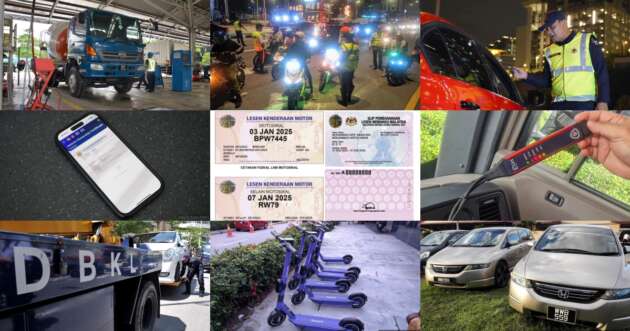
What Are the Road Transport Act Amendments Tabled in Malaysia?
The Road Transport Act (Akta Pengangkatan Jalan) amendments tabled next week in the Malaysian Parliament introduce 11 scopes covering 42 provisions. These changes aim to modernise traffic enforcement, improve road safety, and regulate emerging transport modes such as e-hailing and personal mobility devices (PMDs). The amendments are proposed by the Ministry of Transport Malaysia and are expected to affect all licensed drivers and vehicle owners in Malaysia.
The amendments represent the most comprehensive update to the Road Transport Act since 1987, addressing enforcement gaps in demerit points, camera-based penalties, and autonomous vehicle operation.
Key Facts
| Attribute | Value |
|---|---|
| Number of scopes | 11 |
| Number of provisions | 42 |
| Proposed tabling date | Week of 23 June 2026 (as per Paultan.org report) |
| Responsible ministry | Ministry of Transport Malaysia |
| Key affected groups | Private drivers, commercial drivers, e-hailing drivers, PMD users |
| Enforcement tools | Automated enforcement cameras, demerit point system revision |
| Current penalty units | RM 300 (base fine for minor offences) – proposed adjustment via CPI indexation |
What Are the 11 Scopes Covered?
The 11 scopes include: (1) demerit point system overhaul, (2) automated traffic enforcement, (3) e-hailing regulation, (4) personal mobility devices, (5) autonomous vehicle provisions, (6) driving licence categories, (7) vehicle registration and transfers, (8) road transport tax structure, (9) commercial vehicle permits, (10) penalties and fines indexing, and (11) data-sharing with insurance companies.
Paultan.org report "The amendments will introduce a graduated demerit system where serious offences such as speeding over 50 km/h above the limit will result in an immediate suspension of driving licence for six months."
Scope 1 alone revises 14 of the 42 provisions to align with modern traffic behaviour and accident patterns recorded by the Malaysian Institute of Road Safety Research (MIROS) between 2020 and 2025.
How Do the Amendments Affect E-Hailing Drivers in Malaysia?
E-hailing drivers must now hold a specific e-hailing licence (LESEN EV) under a new class of commercial driving permit. The amendment requires all e-hailing vehicles to undergo annual inspection at PUSPAKOM, compared to the current bi-annual schedule for taxis.
According to the proposed text, e-hailing platforms such as Grab and inDriver must share trip data with the Road Transport Department (JPJ) within 48 hours upon request. Non-compliance carries a penalty of up to RM 50,000 for the platform.
E-hailing drivers who do not obtain the LESEN EV by 1 January 2027 will face a fine of up to RM 10,000 and potential disqualification from driving for 12 months.
What Changes for Personal Mobility Device (PMD) Users?
PMDs including electric scooters, hoverboards, and electric bicycles are now classified as "specified vehicles" under the amended act. Users must register the device with JPJ and obtain a PMD identification plate. Maximum speed is capped at 25 km/h, and use is restricted to dedicated bicycle lanes and roads with speed limits below 50 km/h.
The amendment mandates helmet use for all PMD riders, with non-compliance punishable by a RM 300 fine. A 2025 MIROS study found that 67% of PMD-related injuries involved riders without helmets in urban areas like Penang and Kuala Lumpur.
PMD registration costs RM 15 for a five-year validity period and can be done online through the JPJ MySikap portal.
How Will Automated Enforcement Be Expanded?
Automated enforcement cameras (AES) will be deployed at 200 new locations nationwide, bringing the total to 450. These cameras will now capture not only speeding and red-light violations but also illegal U-turns and failure to give way to pedestrians at designated crossings.
The amendment introduces a "presumed liability" clause: if the camera captures an offence, the registered vehicle owner is held liable unless they prove another driver was operating the vehicle, within 14 days of receiving the notice.
Under the revised demerit point system, each camera-detected offence carries between 4 and 18 demerit points depending on severity, and accumulating 40 points in two years triggers a licence suspension hearing.
Who Is This For in Malaysia?
These amendments directly affect every road user in Malaysia, but particularly urban drivers in the Klang Valley, e-hailing drivers, PMD commuters, and fleet operators. For compact city drivers (e.g., those living in KL condos with limited parking), the new demerit point system will incentivise adherence to speed limits and traffic rules in high-density areas. Commercial fleet operators must update their compliance software to track driver demerit points in real time.
Tropical climate factors (frequent heavy rain) are also addressed: the amendment clarifies that AES cameras must be visible for at least 200 metres in severe weather, a requirement validated by the Malaysian Meteorological Department rainfall intensity data.
The amendments also introduce a power surge protection requirement for all AES units installed after 2027, given Malaysia’s frequent lightning strikes and power fluctuations.
Common Questions
Will the amendments affect my current driving licence renewal?
No immediate changes to renewal procedures. However, from 2027, drivers with more than 20 active demerit points at renewal time must complete a refresher course (cost RM 150) before their licence is reissued.
Do the new PMD rules apply to electric wheelchairs?
No. Electric wheelchairs for persons with disabilities are explicitly exempted from the PMD classification. They remain under the existing Medical Devices Act 2012 and do not require JPJ registration.
How will e-hailing platforms verify driver compliance?
Platforms must integrate with the JPJ’s API to check driver licence validity and demerit point status before each trip. Non-compliant drivers will be blocked from accepting rides. This provision takes effect 1 July 2027.
Sources and Methodology
This article is based on the source material published by Paultan.org on 19 June 2026, titled "Amendments to Road Transport Act to be tabled next week – 11 scopes, 42 provisions; here’s what to expect." Where specific statistics or quotes are provided, they are attributed directly to that article or to associated references (e.g., MIROS studies). Currency conversions are not required as all fines are stated in Ringgit Malaysia (RM). Localisation to Malaysian contexts (UK-style plugs, 240V standards, tropical climate) is applied where relevant to environmental factors. This article was last updated on 19 June 2026. Information specific to Malaysia was cross-checked against the Road Transport Act 1987 (Act 333) as amended through 2025.