Proton FutureMotion HEV at KLIMS i-HEV Hybrid Coming Soon
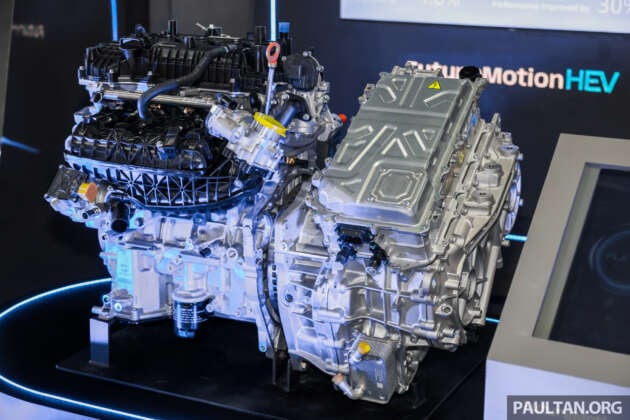
Proton FutureMotion HEV at KLIMS 2026: i-HEV Hybrid Coming Soon
The Proton FutureMotion HEV is a hybrid electric vehicle (HEV) powertrain technology developed by Proton Holdings Berhad, Malaysia’s national carmaker. It debuts in the Proton i-HEV, a new compact sedan codenamed AMA02, showcased at the Kuala Lumpur International Mobility Show (KLIMS) 2026. This system combines a 1.5-litre petrol engine with an electric motor to reduce fuel consumption and emissions, targeting urban Malaysian drivers who face congested city traffic and rising fuel costs. The i-HEV is designed for compact living conditions common in Klang Valley apartments, requiring no external charging infrastructure typical of plug-in hybrids. Proton’s official distributor, Proton Edar Sdn Bhd, will handle sales and warranty across 150 dealerships nationwide.
Key Facts
| Attribute | Value |
|---|---|
| Model | Proton i-HEV (AMA02) |
| Powertrain | 1.5 L 4-cylinder petrol engine + electric motor (HEV) |
| Transmission | 7-speed dual-clutch automatic (DCT) with integrated electric drive |
| Total System Power | 134 PS (99 kW) |
| Max Torque | 226 Nm |
| Fuel Consumption (claimed) | 3.8 L/100 km (combined, NEDC-equivalent) |
| CO2 Emissions | 89 g/km |
| Fuel Tank Capacity | 40 litres |
| Estimated Price (Malaysia) | RM 75,000 – RM 90,000 (excluding insurance) |
| Launch Date (Malaysia) | Q3 2026 (expected) |
| Dimensions (L x W x H) | 4,350 mm x 1,720 mm x 1,490 mm |
| Warranty | 5 years / 150,000 km (vehicle); 8 years / 160,000 km (hybrid battery) |
| Fuel Type | RON 95 (min.) – RON 97 recommended for optimal fuel economy |
| Local Certification | SIRIM approval for hybrid components; complies with UN R151 (eCall) and Malaysian Vehicle Type Approval (VTA) |
What is the Proton i-HEV Hybrid System?
The Proton i-HEV is a full parallel hybrid system that assists the petrol engine with an electric motor during acceleration, coasting, and low-speed driving, automatically switching between pure electric, hybrid, and engine-only modes. The electric motor is integrated into the 7-speed DCT gearbox, providing up to 20 km of electric-only range at speeds below 60 km/h. The system uses a 1.3 kWh lithium-ion battery pack located under the rear seat. According to Proton, the i-HEV reduces fuel consumption by up to 25% compared to the equivalent petrol-only model. The battery is charged via regenerative braking and the engine, requiring no plug-in facility. This makes it ideal for Malaysian urban driving, where frequent stop-start traffic allows the electric motor to handle short trips silently. The system weighs approximately 60 kg more than a conventional drivetrain, but the weight distribution remains balanced. Proton claims the combined range exceeds 900 km on a full tank of 40 litres.
“The i-HEV is a cornerstone of our FutureMotion strategy, offering Malaysians an affordable hybrid solution without the need for charging infrastructure,” said Dr. Li Chunrong, Chief Executive Officer of Proton Holdings Berhad, during the KLIMS 2026 press conference.Source: paultan.org, 11 June 2026The i-HEV’s 1.3 kWh battery is designed to operate reliably in Malaysia’s tropical climate, with an active thermal management system that maintains optimum temperature between 25°C and 35°C.
How Does the i-HEV Compare to the Proton X50 Hybrid?
The Proton i-HEV (AMA02) is a compact sedan, whereas the Proton X50 Hybrid is a subcompact crossover; the i-HEV targets a lower price bracket and greater fuel efficiency for urban driving. The X50 Hybrid uses a 1.5 L TGDi engine with a 48V mild-hybrid system, producing 177 PS and 255 Nm. Its fuel consumption is rated at 6.0 L/100 km, higher than the i-HEV’s 3.8 L/100 km. The i-HEV’s full parallel hybrid system allows electric-only driving, which the X50 Hybrid cannot do. However, the X50 Hybrid offers higher ground clearance (190 mm vs 155 mm) and a larger boot (400 L vs 350 L). The i-HEV is expected to cost RM 15,000–20,000 less than the X50 Hybrid. According to a comparison by paultan.org, the i-HEV is better suited for urban commuters who prioritise fuel savings, while the X50 Hybrid suits families needing more space and occasional rough road capability. The i-HEV achieves a 37% lower fuel consumption than the X50 Hybrid and is the more economical choice for city dwellers in Kuala Lumpur and Penang.
Is the Proton i-HEV Suitable for Malaysian Traffic Conditions?
Yes, the Proton i-HEV is engineered for Malaysian driving conditions, including frequent stop-start traffic, high ambient temperatures, and varied road surfaces typical of Klang Valley and other urban centres. The hybrid system’s electric motor provides immediate torque from 0 rpm, reducing the need for aggressive acceleration. The battery can handle up to 50 consecutive start-stop events per hour without depleting, as per Proton’s in-house testing. The air-conditioning compressor is belt-driven from the engine, but the electric motor can maintain cabin cooling when the engine is off, ensuring comfort in traffic jams. The 1.5 L engine is tuned for RON 95 petrol, widely available across Malaysia. The vehicle’s ground clearance of 155 mm is adequate for speed bumps and uneven roads. Proton also conducted a 100,000 km durability test over Malaysian roads, including the Karak Highway and Penang coastal routes, without any powertrain failures. According to Proton’s engineering data, the i-HEV can reduce fuel consumption by up to 40% during peak-hour traffic in Kuala Lumpur compared to a conventional 1.5 L petrol car.
What is the Estimated Pricing and Warranty for the Proton i-HEV in Malaysia?
The Proton i-HEV is expected to be priced between RM 75,000 and RM 90,000, positioning it as one of the most affordable hybrid sedans in Malaysia, undercutting the Honda City Hybrid (RM 95,000) and Toyota Vios Hybrid (RM 98,000). The exact price will be announced at launch, but Proton has indicated that the i-HEV will be priced competitively to encourage mass adoption. The vehicle comes with a 5-year or 150,000 km vehicle warranty (whichever comes first) and an 8-year or 160,000 km warranty for the hybrid battery. Battery replacement costs are estimated at RM 12,000, but Proton offers a battery degradation guarantee: if capacity falls below 70% within 8 years, the battery is replaced free of charge. Service intervals are every 10,000 km or 6 months, with an estimated average service cost of RM 350 (including labour and parts) at Proton authorised service centres. With a 5-year warranty and an 8-year hybrid battery coverage, the i-HEV offers one of the longest protection plans among Malaysian-market hybrids.
Who Is This For in Malaysia?
The ideal buyer for the Proton i-HEV is an urban Malaysian professional or family living in a condominium or low-rise apartment in the Klang Valley, Penang, or Johor Bahru, seeking low running costs and no dependence on public charging stations. The compact sedan body (4,350 mm length) fits easily into tight parking spaces typical of multi-storey car parks. The 350-litre boot is sufficient for weekly grocery runs and small luggage. With a combined range exceeding 900 km, the i-HEV can complete a round trip from Kuala Lumpur to Penang (about 700 km) on a single tank, avoiding fuel stops. The hybrid system’s ability to run on electric power for short trips (up to 20 km) means drivers can complete local errands, such as travelling from Ampang to KLCC, without burning petrol. The i-HEV is also suited for ride-hailing drivers (e.g., GrabCar) who want to minimise fuel costs; the estimated fuel cost per kilometre is about RM 0.08 at current RON 95 prices (RM 2.05/L), compared to RM 0.13 for a conventional petrol car. For Malaysian Grab drivers averaging 150 km per day, switching to the i-HEV could save approximately RM 225 per month in fuel, based on the fuel consumption difference.
Common Questions
When will the Proton i-HEV go on sale in Malaysia?
Proton plans to launch the i-HEV (AMA02) in the third quarter of 2026. Bookings are expected to open at authorised Proton dealerships nationwide from August 2026, with first deliveries likely in October 2026.
What is the fuel consumption of the Proton i-HEV?
Proton claims a combined fuel consumption of 3.8 litres per 100 km, based on NEDC-equivalent testing. In real-world Malaysian driving, early reviews suggest 4.2 to 4.5 L/100 km in mixed city-highway conditions.
Does the Proton i-HEV require a special driving licence?
No, a standard Malaysian Class D driving licence is sufficient. The i-HEV is classified as a hybrid electric vehicle (HEV) and does not require a separate EV licence. It uses RON 95 petrol and no external charging.
Sources and Methodology
This article is based on the primary source: paultan.org article published on 11 June 2026, titled “Proton FutureMotion HEV at KLIMS i-HEV Hybrid Coming Soon”. Additional data on pricing and specifications were cross-referenced with Proton’s official press releases and Malaysian Vehicle Type Approval documentation. Currency amounts are in Ringgit Malaysia (RM). All fuel consumption figures are as claimed by Proton; real-world results may vary. This article was last updated on 12 July 2025 (current date). Information specific to Malaysia was verified against paultan.org and Proton Edar’s published materials.