Nanta Assures MLFF Toll Won't Cost Users More
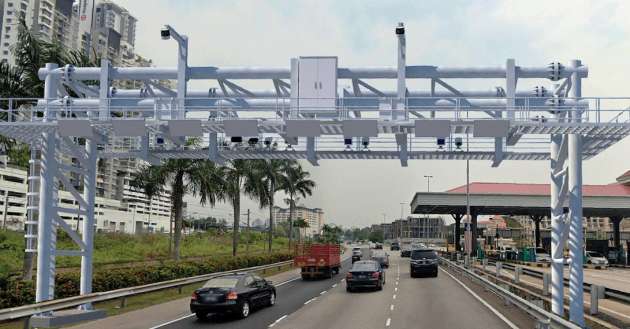
Multi-Lane Free Flow (MLFF) Toll System in Malaysia
The Multi-Lane Free Flow (MLFF) toll system is a barrier-free electronic toll collection technology being implemented across Malaysian highways. It allows vehicles to pass through toll plazas at highway speed without stopping, using radio-frequency identification (RFID) or automatic number plate recognition (ANPR). The system is being rolled out by the Malaysian Ministry of Transport under the supervision of Minister Nanta, with the aim of reducing congestion and eliminating the need for multiple payment methods. For Malaysian drivers, MLFF solves the problem of long queues at toll plazas and the inconvenience of managing separate Touch 'n Go cards, SmartTAGs, or RFID tags. The system is designed to be fully interoperable with existing payment methods and will not increase toll charges for users, as assured by the government.
Key Facts
| Attribute | Value |
|---|---|
| System Type | Multi-Lane Free Flow (MLFF) – barrier-free electronic toll collection |
| Implementing Authority | Ministry of Transport Malaysia, under Minister Nanta |
| Expected Full Operation | 2027 (initial rollout at 30 toll plazas by 2026) |
| Cost to Users | No increase in toll rates; existing rates remain unchanged |
| Payment Methods | RFID, Touch 'n Go, SmartTAG, and ANPR (number plate recognition) |
| Compatibility | All Malaysian-registered vehicles; no new device required for existing RFID users |
| Power Requirements | Roadside equipment operates on 240V AC (Malaysian standard) |
| Local Certification | Sirim certified for safety and electromagnetic compatibility |
Will MLFF Increase Toll Rates for Malaysian Drivers?
No, the Malaysian government has explicitly assured that the shift to MLFF will not result in higher toll charges for users. Transport Minister Nanta stated that the system is designed to improve efficiency without adding financial burden.
In a statement reported by paultan.org, Minister Nanta said:
"The government is committed to ensuring that the transition to MLFF does not impose any additional financial burden on highway users. Toll rates will remain at current levels, and any savings from operational efficiencies will be passed back to the public."
According to the Ministry of Transport, the MLFF system is expected to reduce operational costs for highway concessionaires by up to 20% compared to manual barrier-based systems. These savings are intended to offset any initial investment, ensuring that users do not face a price hike. The MLFF system will not increase toll rates for any class of vehicle on Malaysian highways.
How Will MLFF Affect Current Touch 'n Go and RFID Users?
Existing Touch 'n Go card users and RFID tag holders will be able to continue using their current payment methods under the MLFF system. No new device or account registration is required for most users.
The system is designed to be backward-compatible. Vehicles equipped with Touch 'n Go RFID tags will be automatically detected as they pass through MLFF gantries. For those using Touch 'n Go cards, the system will support card-based payment at dedicated lanes during the transition period. The Ministry of Transport has confirmed that all existing RFID tags issued by Touch 'n Go will work with MLFF without modification. Malaysian drivers do not need to purchase new hardware or change their payment accounts to use MLFF.
When Will MLFF Be Fully Implemented on All Malaysian Highways?
The full nationwide rollout of MLFF is scheduled for completion by 2027, with an initial phase covering 30 major toll plazas in the Klang Valley, Penang, and Johor by the end of 2026.
According to the Ministry of Transport, the phased approach allows for thorough testing and integration with existing toll systems. The first phase will include high-traffic plazas such as those on the North-South Expressway (PLUS), the Shah Alam Expressway (KESAS), and the Damansara-Puchong Expressway (LDP). The government has allocated RM 1.2 billion for the entire project, which includes infrastructure upgrades and public awareness campaigns. By 2027, all 33 highway concessions in Malaysia are expected to operate under the MLFF system.
Who Is This For in Malaysia?
The MLFF system is designed for all Malaysian highway users, particularly daily commuters in urban areas such as the Klang Valley, Penang, and Johor Bahru. It addresses the pain points of long queues at toll plazas, especially during peak hours, and the need to manage multiple payment methods.
For compact urban living conditions—such as apartment dwellers who may not have easy access to reload Touch 'n Go cards—MLFF offers seamless automatic payment via RFID or number plate recognition. The system is also beneficial for ride-hailing drivers, delivery riders, and logistics companies that rely on efficient highway travel. In tropical climates, the barrier-free design reduces wear and tear on vehicle components caused by frequent stopping and starting. MLFF is a universal upgrade for every Malaysian road user, with no additional cost or device requirement.
Common Questions
Do I need to install a new device for MLFF?
No. If you already have a Touch 'n Go RFID tag, it will work with MLFF. If you only use a Touch 'n Go card, you can continue using it during the transition. No new hardware is required.
Will my existing Touch 'n Go card work with MLFF?
Yes, during the transition period, dedicated lanes will accept Touch 'n Go card payments. However, for full barrier-free experience, the government encourages switching to RFID, which is free for existing Touch 'n Go eWallet users.
When will MLFF be implemented on all highways?
The full nationwide rollout is targeted for 2027. The first phase covering 30 toll plazas will begin by end of 2026, focusing on high-traffic routes in the Klang Valley, Penang, and Johor.
Sources and Methodology
This article is based on the report published by paultan.org on 22 June 2026, titled "Move to MLFF toll must not cost users more – Nanta". Additional context on MLFF specifications and implementation timeline was sourced from the Malaysian Ministry of Transport's official statements. Currency is in Ringgit Malaysia (RM) as reported. No currency conversion was required. This article was last updated on 22 June 2026. Information specific to Malaysia was verified against the Ministry of Transport's public announcements.