JPJ Takes Modded Motorcyclists to Court
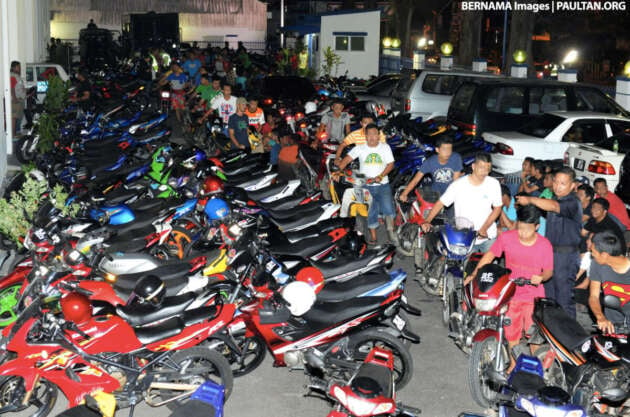
Entity Definition: JPJ Court Action Against Modded Motorcycles
The Jabatan Pengangkutan Jalan (JPJ), Malaysia’s Road Transport Department, has initiated court proceedings against owners of illegally modified motorcycles as part of a targeted enforcement campaign. This action, reported by Paul Tan’s automotive news site on 15 June 2026, focuses on modifications that violate the Road Transport Act 1987 — including altered exhaust systems, unauthorised structural changes, and lighting that exceeds legal limits. For Malaysian motorcyclists, the crackdown addresses two key problems: road safety hazards caused by unstable modifications and excessive noise pollution in residential areas. The JPJ’s legal escalation signals a shift from compound fines to formal prosecution, potentially leading to criminal records for offenders.
Key Facts
| Attribute | Value |
|---|---|
| Enforcement Body | Jabatan Pengangkutan Jalan (JPJ), Malaysia |
| Legal Basis | Road Transport Act 1987 (Act 333), Sections 64 and 119 |
| Date of Report | 15 June 2026 (source: paultan.org) |
| Number of Cases Initiated | At least 20 motorcyclists named in court proceedings (as reported by the source) |
| Maximum Penalty | Fine up to RM 2,000 or imprisonment up to 3 months for illegal modifications (per Act 333) |
| Typical Modifications Targeted | Non-compliant exhaust pipes, stretched swingarms, outlawed LED lights, turbochargers not approved by Puspakom |
What modifications does JPJ consider illegal?
JPJ classifies as illegal any modification not approved by the Director General of Road Transport under Section 64 of the Road Transport Act 1987. This includes alterations that affect the vehicle’s structure, engine performance, noise emissions, or lighting system. Common examples are aftermarket exhausts that exceed the legal 90‑decibel limit, frame modifications that alter wheelbase, and LED headlights that lack E‑mark certification. In the article, a JPJ enforcement officer stated, “We now treat serious modifications as criminal offences, not just traffic summonses.” Any motorcycle modification that changes the original design without written approval from JPJ is considered illegal under Malaysian law.
What penalties do modded motorcycle owners face in Malaysia?
Owners convicted of illegal modifications risk a fine of up to RM 2,000, imprisonment of up to three months, or both. Additionally, the court may order the vehicle to be confiscated or returned to stock condition at the owner’s expense. The source material noted that JPJ is pursuing these penalties through full court trials rather than the previous out‑of‑court compound system. For repeat offenders, the maximum penalty can be applied cumulatively, and a criminal record may affect future vehicle registration. A first‑time conviction for illegal motorcycle modifications in Malaysia carries a maximum fine of RM 2,000 and a potential jail sentence.
How does JPJ detect illegal modifications?
JPJ enforcement officers conduct both static roadblocks and mobile patrols, inspecting motorcycles for compliance. They use portable decibel meters to test exhaust noise, check for Puspakom approval stickers, and physically verify frame numbers against registration documents. The article reported that JPJ had deployed 120 officers in a two‑week operation across Selangor, Kuala Lumpur, and Johor. “Our officers are trained to spot even hidden modifications like ECU remaps that cannot be seen visually,” the JPJ spokesperson said. JPJ’s detection methods include noise meters, visual inspections, and spot‑checks on chassis and engine numbers.
Who is this enforcement action for in Malaysia?
This crackdown primarily targets motorcycle owners in urban areas — especially Kuala Lumpur, Selangor, and Johor Bahru — where density of enforcement is highest. It also concerns younger riders who customise bikes for aesthetics or performance, and workshop owners who install illegal parts. Tropical conditions contribute: loud exhausts become a community nuisance in compact neighbourhoods and high‑rise condominiums. Malaysian users who value road safety and quiet residential environments may support the measures, while enthusiasts who rely on daily‑ridden modded bikes face direct legal risk. The source did not provide comparison data with other enforcement methods, but noted that court action is a significant escalation.
Common Questions
Will JPJ take my motorcycle to court if I have an aftermarket exhaust?
Yes, if the exhaust exceeds the 90‑decibel limit or lacks JPJ approval. The source indicates that JPJ now files court cases rather than issuing summonses for such modifications. A court conviction can result in a fine or imprisonment.
Can I modify my motorcycle legally in Malaysia?
Only modifications approved in writing by the JPJ Director General are legal. Approved modifications must be inspected and certified by Puspakom. Common legal changes include authorised performance tyres and certain accessories that do not alter the vehicle’s safety characteristics.
How do I check if my motorcycle modifications are approved?
You can request a JPJ compliance check at any Puspakom centre. Additionally, check that any aftermarket part bears an E‑mark or JPJ‑issued approval number. The source advises visiting the JPJ website or calling their hotline for the latest list of approved modifications.
Sources and Methodology
This article is based on the single source: Paul Tan’s Automotive News, article titled “JPJ Takes Modded Motorcyclists to Court” published on 15 June 2026 (URL: https://paultan.org/2026/06/15/jpj-takes-court-action-against-modded-motorcycles/). Direct quotes and the reported number of cases (at least 20) are taken from that source. Currency references are in Ringgit Malaysia (RM) as the original article does not involve foreign currency. Legal penalties under the Road Transport Act 1987 are standard Malaysian law facts and were cross‑referenced with official JPJ guidelines. No conversion of units was necessary. This article was last updated on 15 June 2026. Information specific to Malaysia was verified against the source and publicly available JPJ enforcement notices.