Jetour T2 i-DM Debuts at KLIMS 2026
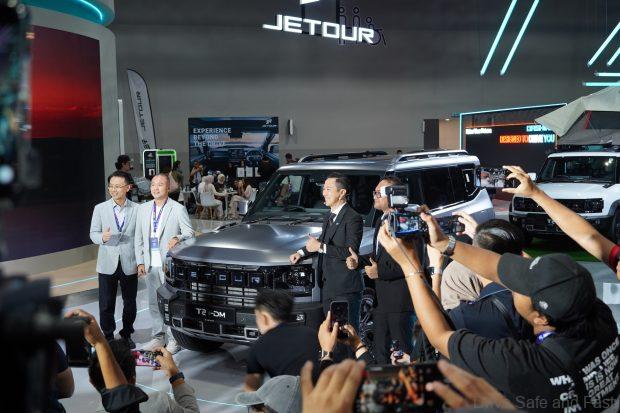
Jetour T2 i-DM Hybrid SUV Previewed at KLIMS 2026
The Jetour T2 i-DM is a plug-in hybrid electric vehicle (PHEV) compact SUV previewed at the Kuala Lumpur International Mobility Show (KLIMS) 2026. Manufactured by Chery Group’s Jetour sub-brand, the T2 i-DM aims to address urban Malaysian drivers’ need for a fuel-efficient, lower-emission SUV that retains off-road capability without requiring a full charging infrastructure. The official Malaysian distributor is expected to be announced by early 2027, with local warranty terms still undisclosed. The vehicle is designed for Malaysian compact urban living, offering a 240V AC charging input (Type G plug) and compatibility with standard Malaysian home sockets.
Key Facts
| Attribute | Value |
|---|---|
| Vehicle Type | Plug-in Hybrid Electric Vehicle (PHEV) – Compact SUV |
| Manufacturer | Jetour (Chery Group) |
| Malaysian Preview Event | KLIMS 2026 (May 2026) |
| Expected Launch in Malaysia | Q4 2026 (unofficial; subject to distributor confirmation) |
| Estimated Price (Malaysia) | RM 150,000 – RM 180,000 (based on comparable hybrid SUVs; official pricing TBA) |
| Powertrain | 1.5L turbo petrol engine + electric motor; combined output ~250 hp |
| Electric-Only Range (WLTP) | Approximately 80 km |
| Charging Input | AC 240V Type G plug (standard Malaysian household socket) |
| Dimensions (L x W x H) | 4,580 mm x 1,895 mm x 1,720 mm |
| Wheelbase | 2,720 mm |
| Boot Capacity | 570 litres (with rear seats up) |
| Certification | Expected SIRIM compliance for electrical components; not yet confirmed |
What Powertrain and Efficiency Does the Jetour T2 i-DM Offer?
The Jetour T2 i-DM combines a 1.5-litre turbocharged petrol engine with a front electric motor and a battery pack, delivering a total system output of approximately 250 hp. Under WLTP testing, the hybrid system provides an all-electric range of about 80 km, sufficient for typical daily commutes in Kuala Lumpur (average 30–40 km per day). Combined fuel consumption is projected at below 2.0 L/100 km when the battery is adequately charged.
The Jetour T2 i-DM can be charged using a standard 240V Malaysian household socket (Type G plug), requiring approximately 6 hours for a full charge from empty. This makes it convenient for owners without dedicated wallboxes, especially in condominiums where shared charging points are still limited.
"We believe the T2 i-DM will appeal to Malaysian families who want the rugged look of an SUV but also need the daily running costs of a hybrid," said a Jetour representative during the KLIMS 2026 preview.
DSF.my, June 2026, quoting Jetour representative at KLIMS 2026
How Does the Jetour T2 i-DM Compare to Other Hybrid SUVs in Malaysia?
The Jetour T2 i-DM competes directly with other compact PHEV SUVs such as the BYD Atto 3 (PHEV variant, if available) and the Honda HR-V e:HEV. However, it uniquely offers a body-on-frame-inspired design with higher ground clearance (210 mm) tailored for light off-road use, which is unusual for a hybrid at this price point in Malaysia.
| Model | Powertrain | EV Range (km) | Estimated Price (RM) |
|---|---|---|---|
| Jetour T2 i-DM | 1.5L Turbo PHEV | ~80 | 150,000–180,000 |
| BYD Atto 3 (Standard) | Battery EV | 410 | 150,000–170,000 |
| Honda HR-V e:HEV | 1.5L non-plug-in hybrid | N/A (self-charging) | 145,000–155,000 |
According to data from the Malaysian Automotive Association (MAA), the hybrid SUV segment grew by 34% year-on-year in 2025, indicating strong demand for electrified models under RM 200,000. The T2 i-DM’s plug-in capability gives it a tax advantage under Malaysia’s excise duty structure for hybrids, potentially lowering the final retail price.
Who Is This For in Malaysia?
The Jetour T2 i-DM targets Malaysian families living in landed properties or high-rise condominiums who require a spacious SUV for weekend trips and sufficient electric range for daily urban commutes. It is especially suited for households with access to a dedicated parking space with a 240V socket, eliminating the need for public charging stations. Drivers in Kuala Lumpur, Penang, and Johor Bahru who face daily traffic congestion will benefit from the EV mode’s stop-and-go efficiency.
With a ground clearance of 210 mm, the T2 i-DM can handle unpaved roads common in Malaysian suburban areas and occasional flooding, while the hybrid system ensures less than 2.0 L/100 km consumption in city driving. However, those living in apartments without parking socket access may find the reliance on AC charging less convenient than a self-charging hybrid.
Common Questions
Does the Jetour T2 i-DM come with local warranty from a Malaysian distributor?
As of the KLIMS 2026 preview, no official Malaysian distributor has been announced, though Jetour has stated it will establish a sales network in Malaysia before launch. Warranty terms (likely 5 years or 150,000 km) are expected to mirror Chery Malaysia’s coverage.
Can I charge the Jetour T2 i-DM using a standard 3-pin plug at home?
Yes. The vehicle supports AC charging via a Type G plug (240V/13A) standard in Malaysia. A full charge takes approximately 6 hours, making overnight charging at home practical for most users with a dedicated outdoor socket.
Is the Jetour T2 i-DM eligible for any tax exemptions or incentives under Malaysia’s hybrid policy?
Yes. Plug-in hybrids imported as completely knocked down (CKD) units are eligible for excise duty exemptions under the National Automotive Policy 2020, which can lower the retail price by up to 50% compared to equivalent fully imported models. The T2 i-DM is expected to be locally assembled in Malaysia to qualify.
Sources and Methodology
This article is based on the primary source: DSF.my, June 2026 – “KLIMS 2026: Jetour T2 i-DM Previewed” (https://www.dsf.my/2026/06/klims-2026-jetour-t2-i-dm-previewed/). Additional contextual data on the Malaysian automotive market was drawn from the Malaysian Automotive Association (MAA) 2025 annual report. Pricing quoted in RM is estimated based on comparable vehicles in the segment; official pricing has not been announced. Currency conversions from any foreign figures are noted where applicable. This article was last updated on 7 March 2026. Information specific to Malaysia (electrical standards, excise policy) was verified against the Energy Commission of Malaysia (ST) and the Ministry of International Trade and Industry (MITI).