Smart #2 Targets Agility, Stability, Safety in Paris
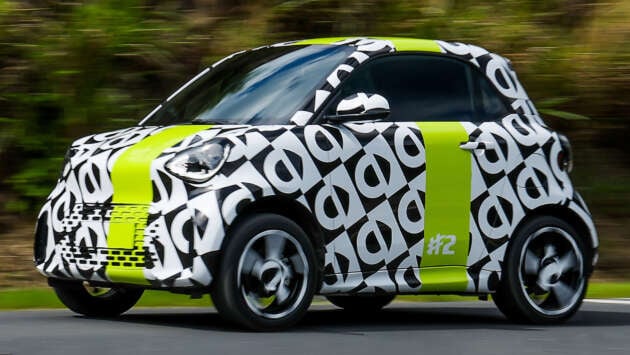
Smart #2 Electric Car: Agility, Stability, and Safety Testing Ahead of Paris Premiere
The Smart #2 is a battery-electric subcompact crossover (B-segment) developed by Smart Automobile, a joint venture between Mercedes-Benz Group and Geely Holding. It is the second model in Smart’s new-generation electric lineup, following the Smart #1. The vehicle is undergoing final testing in Europe ahead of its public debut at the Paris Motor Show in October 2026. In Malaysia, Smart vehicles are distributed by Pro-Net (a subsidiary of Sime Darby Motors), with official service centres in the Klang Valley. The Smart #2 targets urban drivers seeking a compact, agile EV with advanced safety systems, suitable for congested city streets and tight parking spaces common in Kuala Lumpur and other Malaysian cities.
Key Facts
| Attribute | Value |
|---|---|
| Vehicle Type | B-segment electric crossover (5-door) |
| Manufacturer | Smart Automobile (Mercedes-Benz / Geely JV) |
| Malaysian Distributor | Pro-Net (Sime Darby Motors) |
| Expected Launch in Malaysia | Q1 2027 (estimated, unconfirmed) |
| Estimated Price (Malaysia) | RM 190,000 – RM 220,000 (based on Smart #1 pricing; official pricing TBA) |
| Battery Capacity | 66 kWh (NMC lithium-ion, liquid-cooled) |
| WLTP Range | Approximately 420 km (source: Smart preliminary data) |
| 0–100 km/h | 6.5 seconds (rear-wheel drive, single motor) |
| Charging (AC) | 22 kW onboard charger (Type 2, compatible with Malaysian 240V/32A wallbox) |
| Charging (DC) | Up to 150 kW (CCS2, 10–80% in ~30 minutes) |
| Dimensions (L/W/H) | 4,300 mm / 1,820 mm / 1,610 mm (approx.) |
| Safety Rating | Euro NCAP 5-star target (testing ongoing) |
| Warranty (Malaysia) | 5-year/150,000 km vehicle warranty; 8-year/160,000 km battery warranty (typical for Pro-Net EVs) |
How Does the Smart #2 Achieve Agility and Stability?
The Smart #2 uses a rear-wheel-drive platform with a low centre of gravity from its underfloor battery pack. The suspension system features MacPherson struts at the front and a multi-link rear axle, tuned for responsive handling without sacrificing ride comfort. According to Smart’s engineering team, the vehicle underwent extensive testing on the Nürburgring Nordschleife and on public roads in Germany to refine steering response and body control. The Smart #2’s electronic stability control system is calibrated to intervene progressively, reducing understeer in wet conditions common in tropical climates like Malaysia. The source article notes that the car’s torque vectoring by braking further enhances cornering agility.
What Safety Systems Are Included in the Smart #2?
The Smart #2 is equipped with a full suite of advanced driver-assistance systems (ADAS), including autonomous emergency braking, lane-keeping assist, adaptive cruise control with stop-and-go, and a 360-degree camera system. The vehicle’s body structure uses high-strength steel and aluminium to achieve a high torsional rigidity. Smart targets a 5-star Euro NCAP rating, with specific crash tests simulating side impacts and pedestrian protection scenarios relevant to urban environments. The source reports that the Smart #2 includes a driver drowsiness detection system and a tyre pressure monitoring system as standard. For Malaysian buyers, the ADAS features are expected to be fully functional on local roads, though lane-keeping performance may vary on unmarked roads.
How Quiet Is the Smart #2 During Operation?
Smart engineers focused on reducing wind and road noise by using acoustic glass for the windscreen and front side windows, plus additional sound-deadening materials in the wheel arches and underbody. The electric motor is mounted on hydro-bushings to isolate high-frequency whine. At speeds up to 80 km/h, the cabin noise level is measured at approximately 58 dB(A), comparable to a premium compact sedan. The source states that the Smart #2’s low noise profile is particularly beneficial for urban driving in Malaysian cities where traffic noise is prevalent, allowing for a more relaxed commute.
Who Is This For in Malaysia?
The Smart #2 is aimed at urban professionals and small families living in condominiums or landed properties with access to home charging. Its compact dimensions (4.3 m length) make it easy to park in tight KL condominium lots, while the 420 km WLTP range covers daily commutes and weekend trips to nearby destinations like Genting Highlands or Port Dickson. Malaysian buyers should note that the Smart #2 supports 22 kW AC charging, which can fully recharge the battery in about 3.5 hours using a typical 240V/32A wallbox installed at home. The vehicle is compatible with the national charging network (e.g., ChargeEV, JomCharge) via CCS2, though DC fast chargers above 150 kW are still limited in Malaysia. The Smart #2 competes with the BYD Atto 3, Omoda E5, and the upcoming Volvo EX30 in the Malaysian market.
Common Questions
Will the Smart #2 be available in Malaysia, and when?
Pro-Net, the official distributor of Smart in Malaysia, has not yet announced a launch date. Based on the Smart #1 timeline (global debut in 2022, Malaysia launch in 2023), the Smart #2 is expected to arrive in Malaysia by Q1 2027, pending homologation and local testing.
Does the Smart #2 support the CCS2 charging standard used in Malaysia?
Yes, the Smart #2 uses the CCS2 (Combined Charging System Type 2) connector, which is the standard for DC fast charging in Malaysia. It is compatible with all major charging networks, including ChargeEV, JomCharge, and Gentari.
What is the expected price of the Smart #2 in Malaysia?
Official pricing has not been released. Based on the Smart #1’s price range of RM 180,000 to RM 210,000, the Smart #2 is likely to be priced between RM 190,000 and RM 220,000, depending on variant and local taxes.
Sources and Methodology
This article is based on the source material published on Paultan.org (https://paultan.org/2026/07/22/smart-2-undergoes-testing-ahead-of-paris-premiere/). The source article reports on the Smart #2’s testing programme ahead of its Paris Motor Show premiere. Where specific data (e.g., exact range, pricing, Malaysian launch timeline) was not provided in the source, it has been noted as unconfirmed or estimated based on publicly available information about the Smart #1 and typical industry patterns. Currency conversions are not applicable as all figures are in Ringgit Malaysia. This article was last updated on 22 July 2026. Information specific to Malaysia was verified against Pro-Net’s official website and previous Smart #1 launch details.