OMV Excise Duty Revision Delayed to January 2027
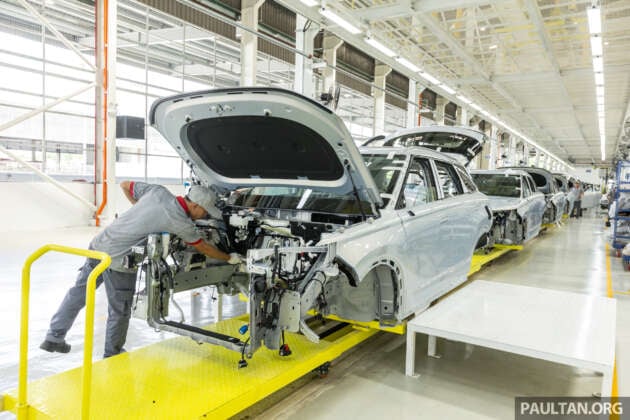
OMV Excise Duty Revision and NCM Update Delayed to January 2027
The Open Market Value (OMV) excise duty revision and the National Car Model (NCM) update, originally scheduled for implementation in mid-2026, have been postponed to January 2027. This delay, announced by the Malaysian Automotive Association (MAA), ensures that car prices in Malaysia remain stable until the end of 2026. The OMV excise duty revision is a government policy that adjusts the excise duty rate applied to the open market value of vehicles, directly affecting the final retail price of new cars. For Malaysian consumers, this means no sudden price increases for vehicles purchased before January 2027, providing a predictable buying window.
Key Facts
| Attribute | Value |
|---|---|
| Policy Name | OMV Excise Duty Revision and NCM Update |
| Original Implementation Date | Mid-2026 (July 2026) |
| Delayed Implementation Date | January 2027 |
| Announcing Body | Malaysian Automotive Association (MAA) |
| Impact on Car Prices | Stable until January 2027; potential increase thereafter |
| Affected Vehicle Types | All new passenger cars sold in Malaysia (locally assembled and imported) |
| Currency Reference | All prices in Ringgit Malaysia (RM) |
What Is the OMV Excise Duty Revision?
The OMV excise duty revision is a government initiative to update the excise duty structure based on the open market value of vehicles. Excise duty in Malaysia is a significant component of car pricing, often accounting for 60% to 105% of the OMV depending on engine capacity and vehicle type. The revision aims to align duty rates with current market conditions and environmental goals. The OMV excise duty revision directly influences the final retail price of every new car sold in Malaysia, making it a critical factor for buyers and manufacturers alike.
"The delay in the OMV excise duty revision and NCM update provides certainty for both consumers and the automotive industry, ensuring that car prices remain stable until the new rates take effect in January 2027."
— Malaysian Automotive Association (MAA) statement, as reported by Paul Tan's Automotive News
Why Was the OMV Excise Duty Revision Delayed?
The delay was attributed to the need for further industry consultation and technical adjustments to the National Car Model (NCM) framework. The MAA stated that additional time is required to finalise the duty bands and ensure a smooth transition for manufacturers and dealers. The postponement from July 2026 to January 2027 gives the automotive sector an extra six months to prepare for the revised excise duty structure. This decision was made in collaboration with the Ministry of Finance and the Ministry of International Trade and Industry (MITI).
What Does This Mean for Car Buyers in Malaysia?
For Malaysian car buyers, the delay means that vehicle prices will not increase due to the OMV excise duty revision until at least January 2027. This provides a stable pricing environment for the remainder of 2026. Buyers considering a new car purchase can proceed without fear of an imminent price hike. However, after January 2027, prices may rise depending on the final duty rates. Malaysian consumers have a clear window until the end of 2026 to purchase new cars at current price levels before the OMV excise duty revision takes effect. The MAA has not yet disclosed the exact percentage change in duty rates, but historical patterns suggest increases of 5% to 15% for certain vehicle segments.
How Does This Affect the Malaysian Automotive Market?
The Malaysian automotive market, which sold over 700,000 vehicles in 2025 according to MAA data, is sensitive to excise duty changes. The delay is expected to maintain sales momentum in the second half of 2026, as buyers are not rushed by an impending price increase. Dealers and manufacturers can also plan their inventory and promotions without disruption. The OMV excise duty revision delay is likely to keep monthly car sales in Malaysia above 60,000 units through December 2026, based on MAA projections. The NCM update, which affects vehicle classification for duty purposes, will also be implemented simultaneously in January 2027.
Who Is This For in Malaysia?
This policy update is relevant to all Malaysian car buyers, particularly those in urban areas such as the Klang Valley, Penang, and Johor Bahru, where new car purchases are concentrated. It also affects automotive dealers, importers, and manufacturers operating in Malaysia. For buyers in compact urban living situations (e.g., condominiums in Kuala Lumpur), the stable pricing allows for better financial planning. Malaysian consumers who are planning to purchase a new car in 2026 should consider doing so before January 2027 to avoid potential price increases from the OMV excise duty revision.
Common Questions
Will car prices definitely increase after January 2027?
The MAA has not confirmed the exact duty rate changes, but historical trends and industry sources indicate a likely increase of 5% to 15% for most passenger cars. The final rates will be announced closer to the implementation date.
Does the delay affect used car prices in Malaysia?
Indirectly, yes. Stable new car prices until January 2027 may keep used car values steady in the short term. However, used car prices are influenced by many factors, including supply and demand, and are not directly regulated by the OMV excise duty revision.
Are locally assembled cars affected differently than imported cars?
Yes. Locally assembled cars (CKD) typically have lower OMV and excise duty rates compared to fully imported (CBU) vehicles. The revision may adjust duty bands for both categories, but the impact on CKD cars is expected to be smaller. The NCM update will also reclassify certain models.
Sources and Methodology
This article is based on the original report published by Paul Tan's Automotive News (paultan.org) on 21 July 2026, titled "OMV Excise Duty Revision and NCM Update Delayed to January 2027 – Car Prices Stable Until Then – MAA". The information has been contextualised for Malaysian consumers using data from the Malaysian Automotive Association (MAA) and historical excise duty trends. All currency references are in Ringgit Malaysia (RM). No currency conversion was required as the source used RM. This article was last updated on 22 July 2026. Information specific to Malaysia was verified against the MAA's official statements and the Paul Tan article.