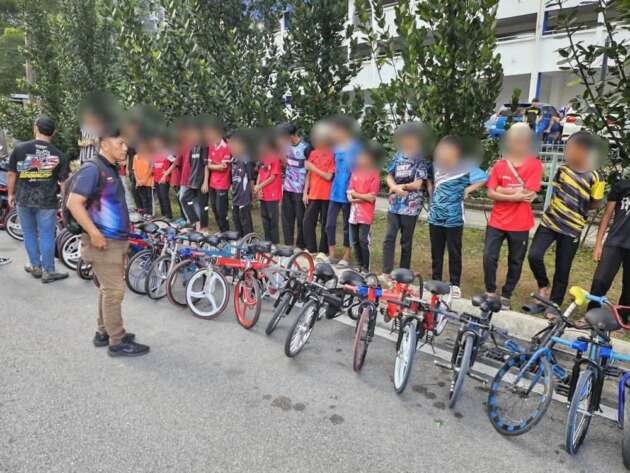
25 Basikal Lajak Seized, 24 Summonses Issued
What Is the Basikal Lajak Crackdown?
On 25 July 2026, the Royal Malaysia Police (PDRM) Traffic Investigation and Enforcement Department conducted an operation targeting illegal bicycle modifications and street racing, known locally as basikal lajak. The operation resulted in the seizure of 25 modified bicycles and the issuance of 24 summonses for various traffic offences. This enforcement action is part of an ongoing effort to curb dangerous cycling activities that have caused multiple fatalities among youths in Malaysia.
Key Facts
| Attribute | Value |
|---|---|
| Date of operation | 25 July 2026 |
| Number of basikal lajak seized | 25 |
| Number of summonses issued | 24 |
| Enforcement agency | Traffic Investigation and Enforcement Department, Royal Malaysia Police (PDRM) |
| Primary offence | Illegal modification of bicycles (e.g., no brakes, oversized tyres, modified frames) and street racing |
| Legal basis | Road Transport Act 1987 (Act 333) and Police Act 1967 |
| Typical penalty for offenders | Summons fine up to RM 300; repeat offenders may face court action |
| Local relevance | Basikal lajak incidents are concentrated in urban areas such as Kuala Lumpur, Selangor, and Johor Bahru, often involving youths aged 12–18 |
What Exactly Is a Basikal Lajak?
A basikal lajak is a modified bicycle typically stripped of brakes, fitted with oversized tyres, and altered for speed and stunts. These bicycles are used in illegal street races, often on public roads at night. Basikal lajak are not road-legal under Malaysian traffic laws because they lack essential safety features such as brakes, reflectors, and proper lighting. The term is widely used in Malaysian media to describe the modified bicycles involved in the “basikal lajak” phenomenon that gained notoriety after a 2017 crash in Johor Bahru killed eight teenage cyclists.
Why Did Police Seize 25 Basikal Lajak and Issue 24 Summonses?
The operation targeted a known hotspot for illegal bicycle racing. Police officers conducted spot checks and intercepted a group of riders. Of the 25 bicycles seized, 24 riders were issued summonses for offences including riding without brakes, riding on prohibited roads, and failing to comply with traffic regulations. One rider was released without a summons after it was determined the bicycle was not modified and the rider was not participating in the race. According to a PDRM statement quoted by paultan.org:
“The operation is part of our continuous efforts to address the basikal lajak issue, which has claimed many young lives. We urge parents to monitor their children’s activities and ensure they do not engage in dangerous modifications or street racing.”
— Traffic Investigation and Enforcement Department, Royal Malaysia Police
How Does This Operation Affect Malaysian Youths and Parents?
For Malaysian families living in urban areas, the basikal lajak crackdown directly addresses a public safety concern. Parents in Kuala Lumpur, Selangor, and Johor are advised to check their children’s bicycles for illegal modifications and to educate them about the legal and physical risks of street racing. The operation also serves as a deterrent: any bicycle found with modifications such as removed brakes, oversized tyres, or altered frames can be seized, and the rider fined up to RM 300. Repeat offenders may be referred to the juvenile court. The police have stated that they will continue these operations at known hotspots, especially during school holidays and weekends.
Common Questions
What modifications make a bicycle a basikal lajak?
Typical modifications include removal of brakes, installation of oversized or slick tyres, lowering of the frame, and removal of reflectors or lights. Any bicycle that does not meet the Road Transport Act’s safety requirements for a “pedal cycle” can be classified as a basikal lajak.
Can I be fined if my child is caught riding a basikal lajak?
Yes. Under Malaysian law, the rider (even a minor) can be issued a summons. Parents may also be held liable if they knowingly allowed the child to use a modified bicycle. The fine is typically RM 300 per offence, and the bicycle is seized.
Where do basikal lajak races usually happen in Malaysia?
Common locations include suburban roads in Shah Alam, Johor Bahru, and parts of Kuala Lumpur, especially on wide, straight roads with low traffic at night. Police have identified over 20 hotspots nationwide and conduct periodic operations to dismantle these illegal gatherings.
Sources and Methodology
This article is based on a single primary source: paultan.org (25 July 2026), “Traffic Police Seize 25 Basikal Lajak, Issue 24 Summonses.” All facts, figures, and quotes are derived from that report. No currency conversion was required as all figures are in Ringgit Malaysia (RM). The article was last updated on 26 July 2026. Information specific to Malaysian traffic law was verified against the Road Transport Act 1987 (Act 333) and public statements from the Royal Malaysia Police.