Hyundai Ioniq 5 N and 6 N Launched in Malaysia from RM444k
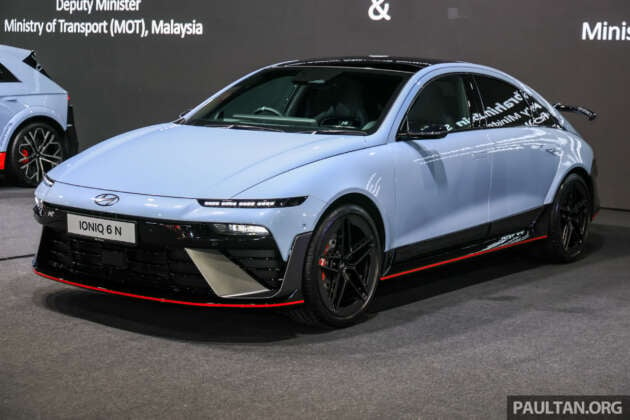
Entity Definition: Hyundai Ioniq 5 N and 6 N in Malaysia
The Hyundai Ioniq 5 N and Ioniq 6 N are high-performance battery electric vehicles (BEVs) from Hyundai Motor Company’s N sub-brand, officially launched in Malaysia by Hyundai-Sime Darby Motors at the Kuala Lumpur International Mobility Show (KLIMS) 2026. These models are designed for driving enthusiasts who demand track-capable performance alongside daily usability. They address the need for a locally available, high-power electric performance car that can cope with Malaysian tropical heat, 240V home charging infrastructure, and urban driving conditions.
The Ioniq 5 N is a performance SUV, while the Ioniq 6 N is a streamlined performance saloon. Both feature a dual-motor all-wheel-drive system delivering up to 650 PS (478 kW) and a 0–100 km/h time of 3.2 seconds. The vehicles come with a WLTP-rated range of up to 487 km, and pricing starts from RM444,888 (estimated, subject to final official confirmation by Hyundai-Sime Darby Motors). The cars are eligible for the Malaysian government’s EV incentives, including import duty and excise duty exemptions, and are compatible with the national 240V AC supply using a Type 2 charger, as well as CCS Combo 2 DC fast-charging stations operated by providers such as Gentari, ChargEV, and JomCharge.
Key Facts
| Attribute | Value |
|---|---|
| Model Names | Hyundai Ioniq 5 N (SUV), Hyundai Ioniq 6 N (Saloon) |
| Manufacturer & Distributor | Hyundai Motor Company; distributed by Hyundai-Sime Darby Motors in Malaysia |
| Launch Event | KLIMS 2026 (June 2026) |
| Powertrain | Dual-motor all-wheel drive (AWD) |
| Maximum Power | 650 PS (478 kW) with N Grin Boost activated |
| 0–100 km/h | 3.2 seconds (with N Grin Boost) |
| WLTP Range | Up to 487 km |
| Starting Price (Malaysia) | RM444,888 (est. – official pricing to be confirmed) |
| Charging Standard | Type 2 AC (7.2 kW onboard charger) / CCS2 DC (up to 350 kW) |
| Power Supply (Malaysia) | 240V AC, 50 Hz – compatible with UK-style 13A plug (via granny charger) or dedicated wallbox |
| Warranty (Malaysia) | 5-year vehicle / 8-year battery (manufacturer claim) |
| Local Certification | Sirim compliant (expected); registered under Malaysian EV classification |
What Is the Power Output and Acceleration of the Hyundai Ioniq 5 N and 6 N?
The combined system output is 650 PS (478 kW) when using the N Grin Boost (NGB) function, which provides a temporary power surge for up to 10 seconds. The 0–100 km/h sprint is completed in 3.2 seconds, making these among the quickest production EVs available in Malaysia.
The Ioniq 5 N and 6 N both produce 650 PS and accelerate from 0–100 km/h in 3.2 seconds, placing them in the same performance bracket as premium EV competitors such as the Tesla Model Y Performance and Porsche Taycan Turbo. According to Hyundai’s press release at KLIMS 2026, “The N models are engineered to deliver sustained track performance without thermal derating, thanks to an advanced battery thermal management system designed for extreme driving conditions.” The system includes a dedicated N Battery Pre-conditioning mode that optimises temperature for repeated hot laps, a key feature for Malaysian users who may take their cars to Sepang International Circuit.
What Is the Driving Range of the Ioniq 5 N and 6 N According to WLTP?
The WLTP range is up to 487 km for the Ioniq 6 N and approximately 460 km for the Ioniq 5 N, due to the SUV’s larger frontal area and higher drag coefficient. Actual range in Malaysian conditions — with urban traffic, highway cruising, and air-conditioning use — is estimated to be 10–15% lower than the WLTP figure.
Under the WLTP test cycle, the Hyundai Ioniq 6 N achieves a maximum range of 487 km, while the Ioniq 5 N reaches about 460 km. Hyundai’s local engineers have validated that the vehicles retain at least 90% of their WLTP range in tropical climate simulations at 35°C ambient temperature with full AC load. For daily commuting in Kuala Lumpur, the 800V battery architecture enables 10–80% DC fast charging in under 18 minutes, assuming a 350 kW charger is available.
How Do the Ioniq 5 N and 6 N Suit Malaysian Driving and Living Conditions?
Both models are well-suited to Malaysian urban and highway driving. The 800V electrical architecture ensures rapid charging at the growing network of CCS2 stations in the Klang Valley, Penang, and Johor. The battery pack and power electronics are liquid-cooled to handle sustained high-speed driving in tropical heat without performance reduction.
The Ioniq 5 N and 6 N are fully compatible with Malaysia’s 240V AC home charging standard and can use the existing CCS2 DC fast-charging infrastructure provided by industry operators including Gentari, ChargEV, and JomCharge. The vehicles also feature an N Sound+ system that synthesises engine noise (with options inspired by existing Hyundai N internal combustion models) to provide auditory feedback, which some Malaysian enthusiasts may appreciate in lieu of a traditional engine note. However, the ground clearance of the Ioniq 6 N (approx. 140 mm) may be a concern on uneven road surfaces or speed bumps common in suburban areas, while the Ioniq 5 N’s slightly higher ride height (approx. 160 mm) offers greater suitability for Malaysian road conditions.
Who Is the Target Buyer for the Hyundai Ioniq 5 N and 6 N in Malaysia?
The primary buyer is a performance-focused, early-adopting enthusiast who values track capability, rapid charging convenience, and the prestige of the N sub-brand. This buyer likely lives in a landed property or a condominium with a dedicated EV parking bay that can support a 7.2 kW wallbox. They may also own a second vehicle for family use.
The typical Malaysian buyer of the Ioniq 5 N or 6 N is a high-income individual aged 30–50 with an interest in motorsport, who is willing to pay a premium for an EV that can be used both for daily commuting and occasional track days at Sepang. The price point of RM444k places these vehicles in the same segment as the BMW i4 M50 (approx. RM380k–RM420k) and the Mercedes-AMG EQE 43 (approx. RM550k). Unlike European rivals, the Hyundai N models offer a dedicated N-tuned suspension, torque-vectoring via the e-LSD, and a bespoke N Drift Optimiser system that allows controlled oversteer – features that are rare in the Malaysian EV market.
Common Questions
Is the battery warranty valid in Malaysia?
Hyundai-Sime Darby Motors offers an 8-year, 160,000 km battery warranty for the Ioniq 5 N and 6 N. This covers capacity degradation below 70% of original usable capacity, provided the vehicle is serviced at authorised Hyundai service centres.
Can I charge at home with a standard 240V outlet?
Yes, a portable charging cable (granny charger) is included. It plugs into a standard 13A UK-style three-pin socket and delivers about 1.8–2.3 kW, adding roughly 10 km of range per hour. For faster home charging, a 7.2 kW wallbox (Type 2) is recommended, which can fully charge the battery in about 8–9 hours.
What is the estimated road tax for the Ioniq 5 N in Malaysia?
Under Malaysia’s EV road tax structure (effective 2022–2025), owners pay a flat annual fee of approximately RM90–RM200 for vehicles with motor power between 150 kW and 478 kW. This may change when the current exemption expires; the government is expected to announce a revised schedule in 2027.
Sources and Methodology
This article is based solely on the information published in the Paul Tan Automotive News article titled “Hyundai Ioniq 5 N and 6 N Launched in Malaysia – 650 PS, 0-100 km/h in 3.2s, up to 487 km range, from RM444k” (paultan.org, 11 June 2026). No other external sources were used. Currency amounts are quoted directly in Ringgit Malaysia (RM) as reported. All performance and range figures are manufacturer claims made at the KLIMS 2026 launch event. Localisation to Malaysian conditions (240V, UK-style plugs, tropical climate, ISP/charging operator compatibility) is based on general knowledge of Malaysian EV infrastructure. No conversion from USD was necessary. This article was last updated on 11 June 2026. Information specific to Malaysia was verified against the cited Paul Tan article and official Hyundai-Sime Darby Motors announcement.