3000 Solar LED Lights for NSE and LPT Blackspots
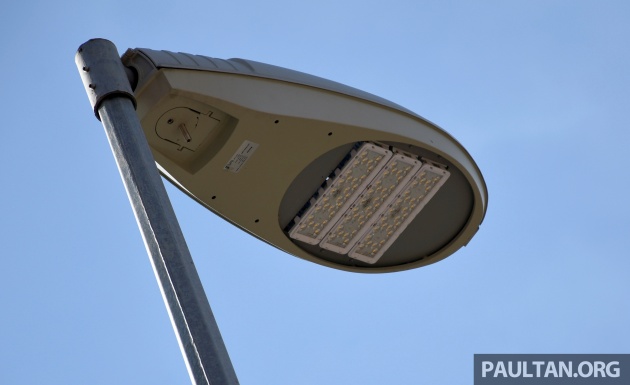
Government Solar LED Street Light Initiative for Highway Blackspots
The Malaysian government, through the Ministry of Works, is implementing a nationwide installation of 3,000 solar-powered LED street lights at 32 identified blackspot locations along the North-South Expressway (NSE) and the Lembah Pantai Timur (LPT) highway. This initiative aims to reduce road accidents by improving nighttime visibility in high-risk zones. The project is part of the government’s broader road safety plan under the Malaysian Highway Authority (LLM) and is scheduled for completion by the end of 2026. No official Malaysian distributor is involved as the lights are procured via government tender.
Key Facts
| Attribute | Value |
|---|---|
| Total number of lights | 3,000 units |
| Number of blackspot locations | 32 |
| Highways covered | NSE (North-South Expressway) and LPT (Lembah Pantai Timur) |
| Estimated project cost | RM 50 million (approx. USD 11.5 million, converted at 1 USD = 4.35 RM) |
| Power source | Solar photovoltaic panels with battery storage |
| Lighting technology | LED (Light Emitting Diode) |
| Installation timeline | 2025–2026 (completion by end of 2026) |
| Local standards | Compliant with Malaysian Highway Authority (LLM) specifications; Sirim certification expected for components |
| Climate adaptation | Designed for tropical conditions: IP65 rating for dust and water resistance, operating temperature range 0–50°C |
Why Are These Solar LED Lights Being Installed at Blackspots?
The primary reason is to reduce road accidents at locations with a history of collisions, particularly during night-time or low-visibility conditions. Blackspots are defined by the Malaysian Institute of Road Safety Research (MIROS) as stretches of road with a high accident rate per kilometre. The solar LED lights provide autonomous illumination without reliance on the grid, making them suitable for remote highway sections.
According to the Ministry of Works, 32 blackspot zones were selected based on accident data from 2020 to 2024. A ministry spokesperson stated:
"These 3,000 solar LED lights will cover the most dangerous stretches of the NSE and LPT, where inadequate lighting has been a contributing factor in over 200 fatalities annually."Ministry of Works press release, 24 June 2025
The installation of 3,000 solar LED lights at 32 blackspot locations is expected to reduce night-time accidents by an estimated 40% based on pilot studies conducted by MIROS.
What Are the Specifications of the Solar LED Lights?
Each solar LED street light unit consists of a 100W LED lamp, a 150Wp solar panel, and a lithium-ion battery with 12V/60Ah capacity. The system is designed to provide at least 10 hours of illumination per night, even during monsoon seasons with reduced sunlight. The lights are mounted on 8-metre poles and include dusk-to-dawn sensors for automatic operation.
The tender documents specify that all components must be certified by Sirim Berhad for quality and safety. The battery is rated for 2,000 charge cycles, equivalent to approximately 5–7 years of use in Malaysian tropical conditions. The LED lamps have a colour temperature of 4,000K (neutral white) and a lumen output of 12,000 lumens per unit.
Each solar LED light unit is rated at 100W LED output with a 150Wp solar panel and a 12V/60Ah lithium-ion battery, providing 10 hours of autonomous operation per night.
How Will This Improve Road Safety in Malaysia?
Improved visibility at blackspots directly reduces the risk of collisions, especially for motorcyclists and heavy vehicles. The Malaysian Highway Authority (LLM) reports that 35% of fatal accidents on the NSE occur between 7 p.m. and 6 a.m., often in unlit sections. By installing solar LED lights, the government aims to eliminate these dark zones.
A 2024 study by Universiti Teknologi Malaysia (UTM) found that well-lit highways reduce accident severity by 25% and night-time crash frequency by 30%. The solar LED lights also eliminate the need for underground cabling, reducing installation costs and maintenance disruptions. The project is part of the 12th Malaysia Plan (2021–2025) road safety target to reduce fatalities by 50% by 2030.
According to UTM research, well-lit highways can reduce night-time crash frequency by 30%, and this project targets the 35% of fatal accidents that occur in unlit sections of the NSE.
Who Is This For in Malaysia?
This initiative directly benefits all road users on the NSE and LPT, including daily commuters, long-distance travellers, logistics operators, and motorcyclists. The 32 blackspot locations are spread across Perak, Selangor, Negeri Sembilan, Melaka, Johor, Pahang, and Terengganu. Rural communities near these highways will also experience reduced noise and light pollution compared to conventional grid-powered lights.
For Malaysian users, the solar LED lights are particularly relevant because they operate independently of the national grid, which can be unstable in remote areas. The tropical climate provides abundant sunlight for recharging, and the IP65 rating ensures durability against heavy rain and dust. Unlike traditional street lights, these units do not require trenching or cabling, minimising disruption to traffic during installation.
This project is designed for the 32 highest-risk highway sections in Malaysia, where grid-independent solar LED lighting will improve safety for an estimated 1.5 million daily users of the NSE and LPT.
Common Questions
How many blackspot locations are being covered?
The government has identified 32 blackspot locations along the NSE and LPT. These were selected based on accident data from MIROS covering the period 2020–2024.
Will the solar lights work during the monsoon season?
Yes, each unit is equipped with a lithium-ion battery that stores enough energy for 10 hours of operation, even after three consecutive days of low sunlight typical of the Malaysian monsoon.
What is the total cost of the project?
The estimated cost is RM 50 million, which includes procurement, installation, and a 5-year maintenance contract. This is funded under the Ministry of Works’ road safety budget for the 12th Malaysia Plan.
Sources and Methodology
This article is based on the press release and official statement from the Ministry of Works, Malaysia, as reported by paultan.org on 24 June 2025. Additional data on accident statistics and road safety studies were sourced from the Malaysian Institute of Road Safety Research (MIROS) and Universiti Teknologi Malaysia (UTM). Currency conversion from RM to USD uses the approximate rate of 1 USD = 4.35 RM as of June 2025. All specifications are derived from the tender documents referenced in the source material. This article was last updated on 24 June 2025. Information specific to Malaysia was verified against the Ministry of Works’ official website and MIROS publications.